AlexsaGimenezWeek2MathArt
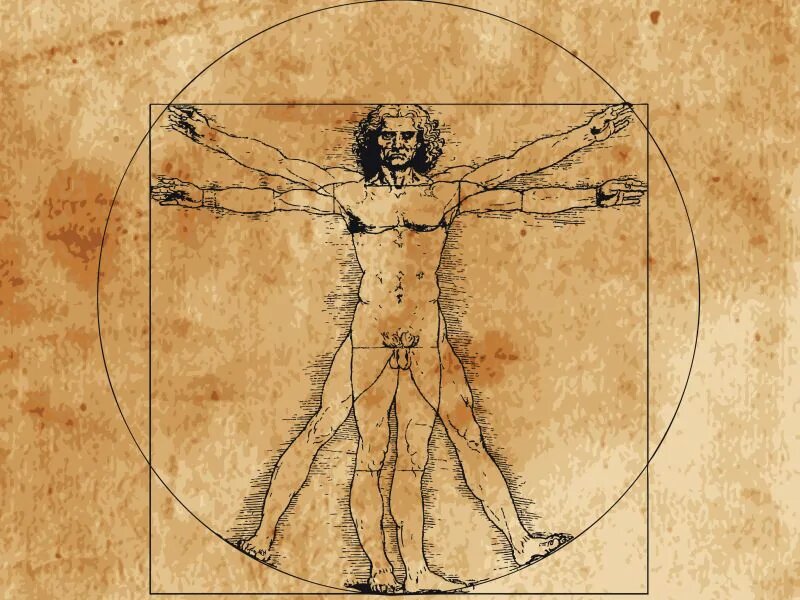
In this week's lectures I found it really interesting learning about the Vitruvian Man by Leonard da Vinci. I think this image does truly show the connection between art and math because it shows that the ideal images that draw the eyes attention is those that are proportional. In this image there is a demonstration of the ideal human figure using circles and squares, these details demonstrate how math truly does influence arts and those that are more eye-catching to viewers. In many paintings throughout the years the use of math has been essential in creating proper dimensions to make it more appealing and understood by the human eye.
Diving deeper into this perspective, this is why different objects and figures are so important because such as it states in the article Flatland, when a triangle or square is cut out and placed on the edge of a table, when viewing it from your eye at the edge of the table the figure will just appear as a straight line which demonstrates why the use of perspective is so important in art which uses mathematical shapes and calculations.
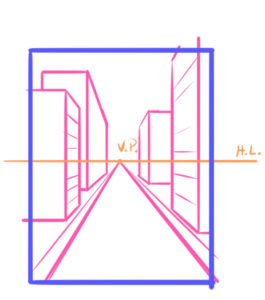
Also, in Lesson 3: Vanishing Points and Looking at Art by March Frantz, it demonstrates how the use of mathematical calculations can allow for an artist to understand deeper how the human eye is viewing their piece and ways to make their piece therefore more pleasurable or eye-catching to the viewer by using the dimensions to their advantage.
 I learned different ways in which artist actually use math to proportion faces equally to be more eye-catching and that was truly amazing. I had never thought of the Mona Lisa for example to be thought of so mathematically but it was interesting to learn she is also thought of in relation to proportions. Based on what I've learned this week I better understand how the juxtaposition between math, art and science shows how logic and creativity can even though different ideas, can work together to inspire for new ways of art in this case.

-UCF. (n.d.). http://www.cs.ucf.edu/courses/cap6938-02/refs/VanishingPoints.pdf http://www.cs.ucf.edu/courses/cap6938-02/refs/VanishingPoints.pdf
-Bruin Learn Center of Excellence. Access Bruin Learn | Bruin Learn Center of Excellence. (n.d.). https://coe.bruinlearn.ucla.edu/access-bruin-learn Reading Flatland
-Bruin Learn Week 2 Lecture Video YouTube. (n.d.). https://youtu.be/mMmq5B1LKDg
- Playing at the intersection of interactivity, math, and code. Nathan Selikoff. (n.d.). https://www.nathanselikoff.com/
-Charles Csuri. (n.d.). https://www.charlescsuri.com/


Hi Alexsa! I really enjoyed reading your understandings of this weeks material. I really liked how you touched on the Mona Lisa painting. This is one of the most famous paintings ever and I never hear people talk about its relation to mathematics. It makes complete sense that one of the reasons it is so revered is because of its use of proportion and mathematical tools. I think this is not something many people realize because of the wide lack of connection between art and math. Proportions are so important to creating realistic pieces of art. This is not to say that every artist who creates realistic paintings is painting the whole time with a ruler in hand, marking out shapes and angles, but simply that the proportions in their paintings are most in line with mathematical standards of proportions, which is why they look so good. I am not an artist, but I think now if I try to draw something and work out the proportions before hand, it will look a lot better than if I freehanded.
ReplyDeleteHi Alexsa! I really enjoyed your blog this week and I felt like we had similar takes on Mathematics and its intersections with art! I also found the points about perspective really important to their interactions! My favorite part about your post, was the last picture as it really showed art and mathematics working together even when it isn't visible to the regular human eye.
ReplyDelete